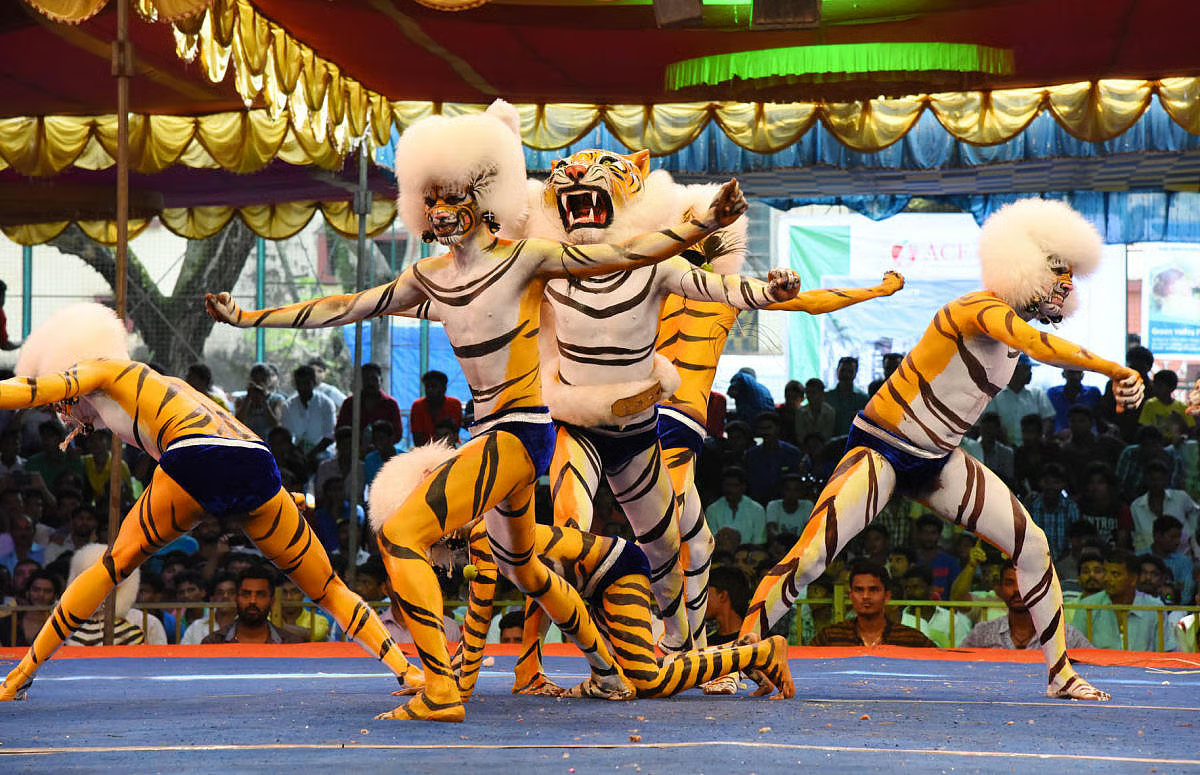
Huli Vesha, the Tiger Dance
Devotion, endurance and artistry, danced as a living tiger.
Among the most colourful and energetic folk traditions of coastal Karnataka, Huli Vesha occupies a special place in the cultural life of Kundapura. The term means "tiger costume" in Kannada: performers paint their bodies to resemble tigers and dance through streets, temple precincts and public spaces during festive celebrations. Most strongly associated with the Krishna Janmashtami celebrations of the coast, it has become a cultural symbol representing the spirit, energy and artistic heritage of the region. For the people of Kundapura it is far more than a performance, it is a celebration of devotion, community participation, physical endurance, artistic creativity and cultural pride.
Historical origins
The origins of Huli Vesha are believed to date back several centuries. Local traditions suggest the practice evolved as a devotional offering during Krishna Janmashtami: devotees who wished to fulfil vows or express gratitude to Lord Krishna would dress as tigers and dance through villages and towns. Over time these performances developed into organised cultural events involving troupes of performers, musicians and community organisations, and the tradition spread throughout coastal Karnataka, becoming especially popular in Kundapura, Udupi, Mangaluru and the surrounding areas.
Connection with Krishna Janmashtami
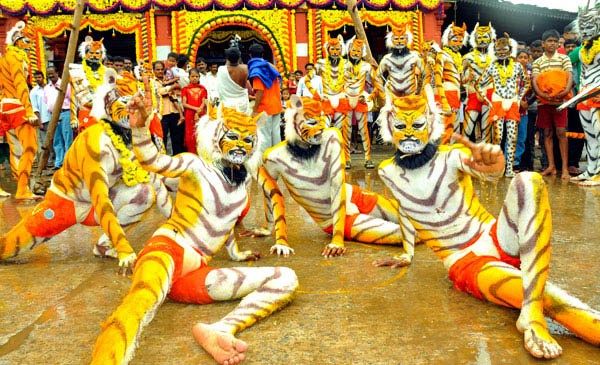
Huli Vesha is most closely tied to Krishna Janmashtami, the festival celebrating the birth of Lord Krishna, and the celebrations often continue for several days afterward. During the festival, tiger dancers travel through towns and villages in colourful processions, and community participation reaches its peak. The festive atmosphere the dancers create has become an integral part of the Janmashtami season on the coast.
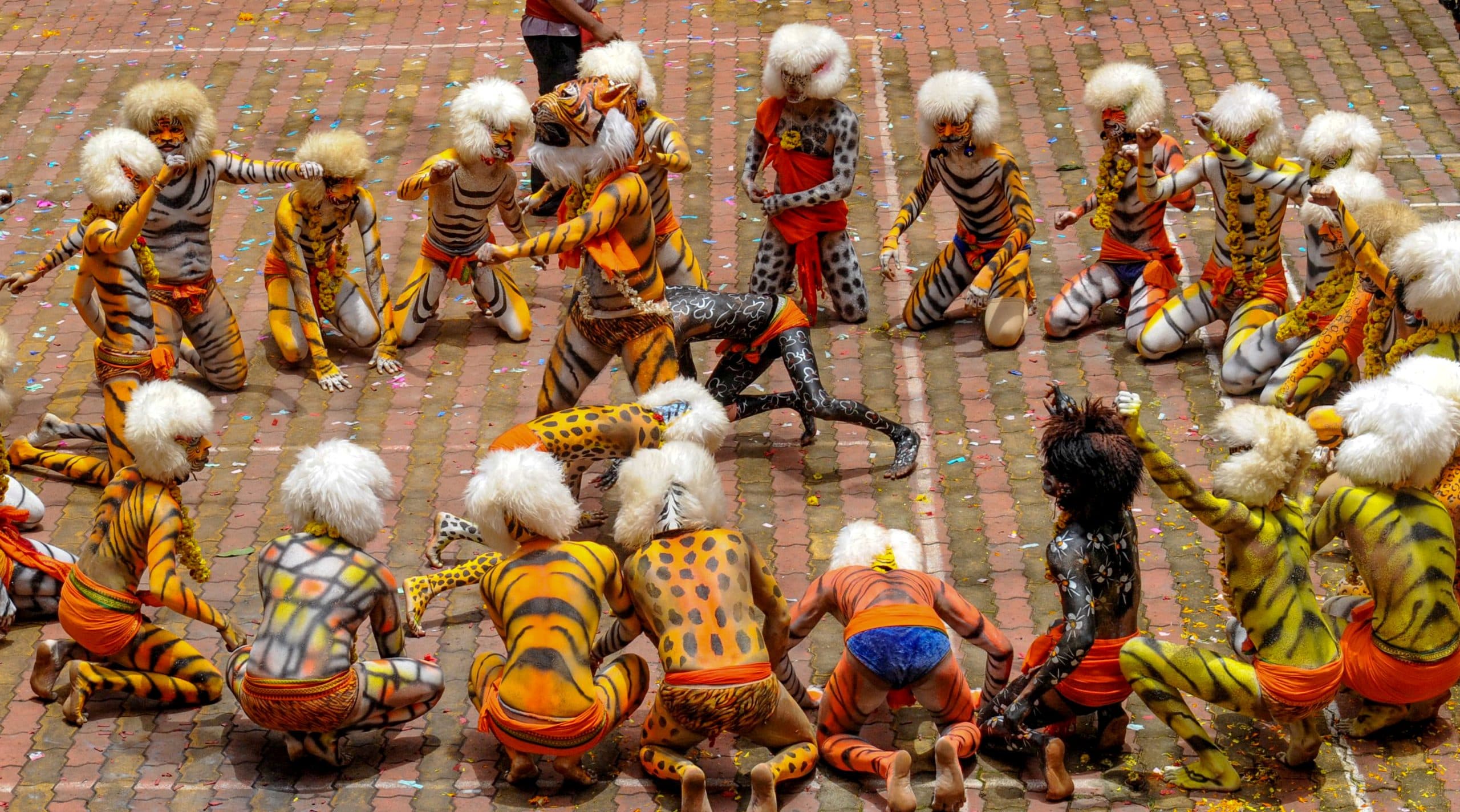 A Janmashtami procession of tiger dancers
The art of transformation
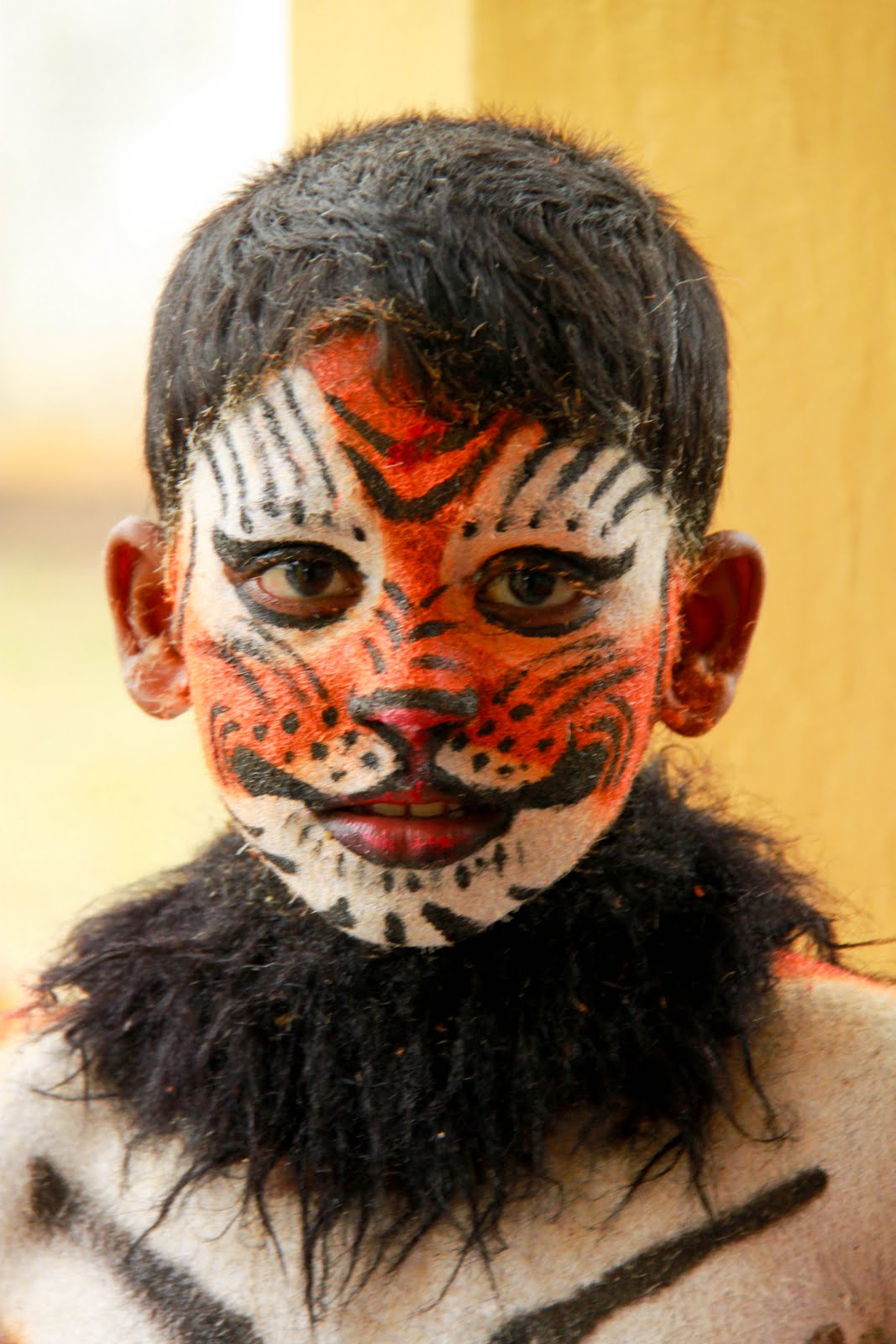
One of the most remarkable aspects of Huli Vesha is the elaborate body painting. Transforming a performer into a tiger requires considerable skill, patience and artistic expertise, and the painting alone may take several hours to complete. Artists carefully create realistic tiger patterns that enhance the visual impact of the performance, a transformation that symbolises strength, courage, energy and the spirit of the tiger.
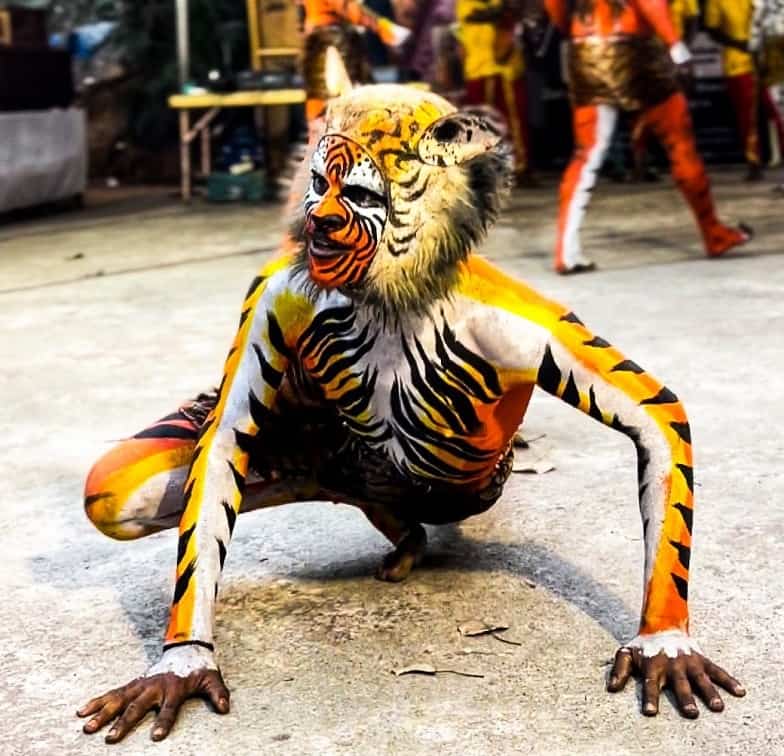
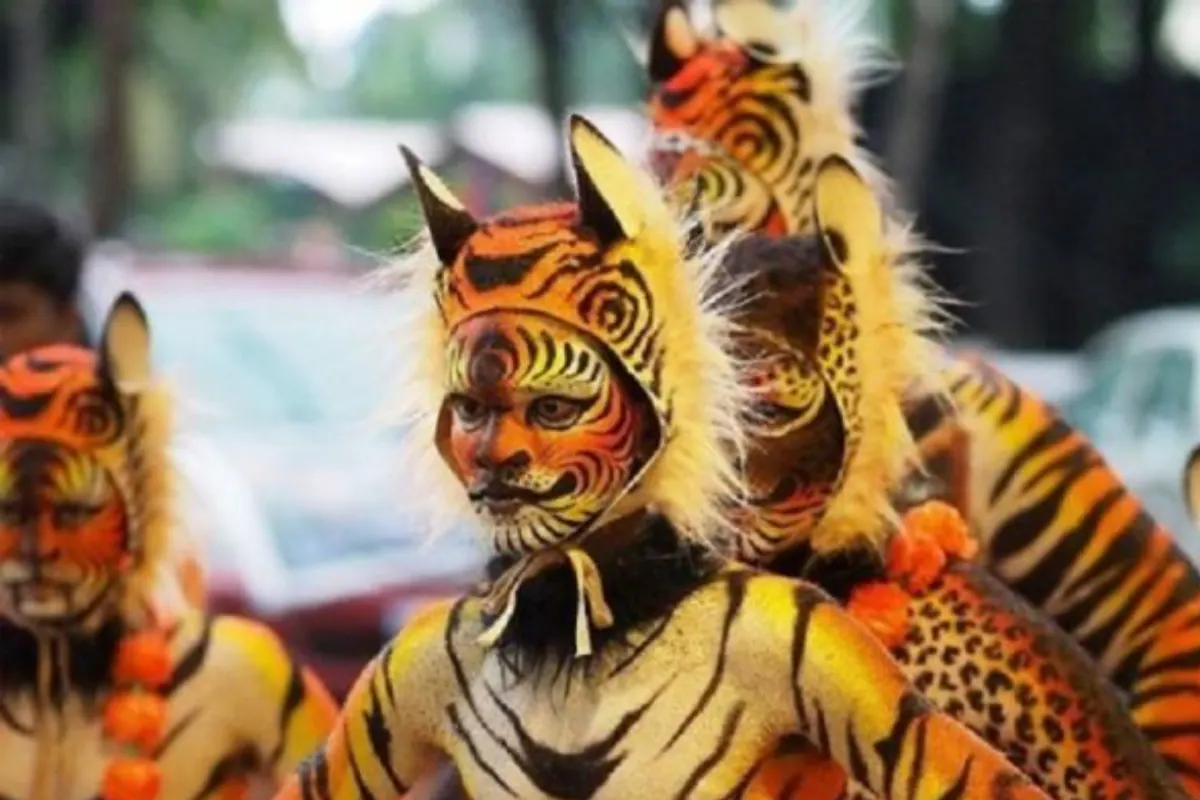
The full transformation brings together many elements, each adding to the living-tiger effect:
- Full-body painting with detailed tiger stripes
- Facial artwork and a furred tiger headpiece or mask
- Tail attachments and special costumes
- Decorative accessories that complete the look
The dance performance
The Huli Vesha dance is characterised by energetic movements that imitate the behaviour of a tiger, the performers leaping, running, stalking, roaring and pouncing in rhythm. These movements are synchronised with traditional percussion, and the dancers often interact with the spectators, creating an engaging and entertaining experience. Their physical stamina and endurance are greatly admired by audiences.
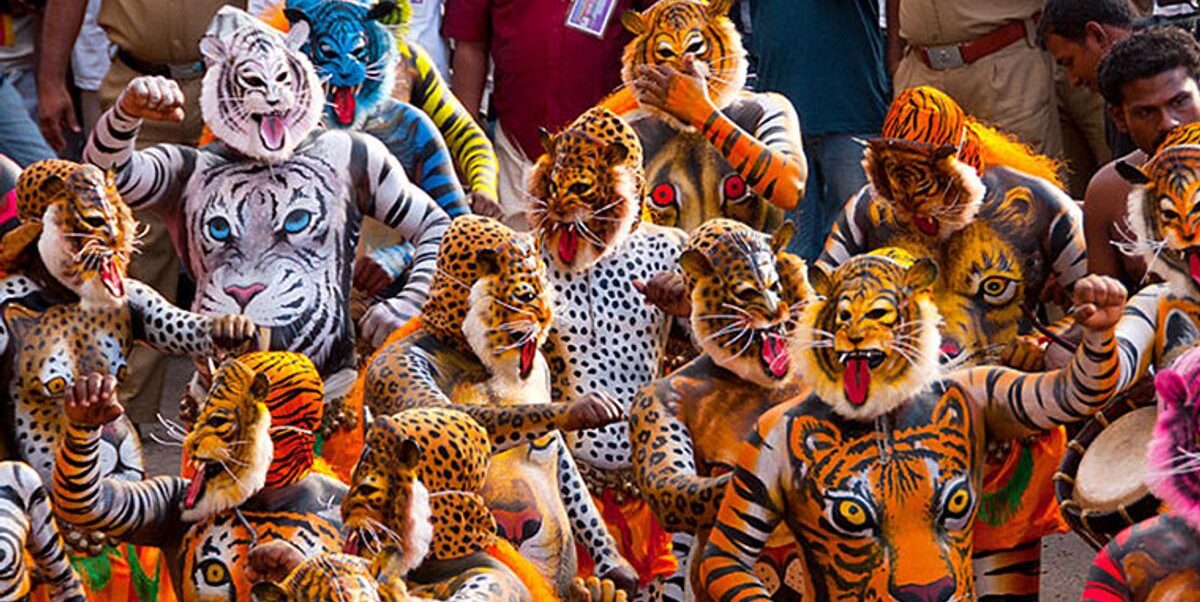 The energy of the tiger dance
Music and percussion
Music forms the backbone of every Huli Vesha performance. The powerful drumbeats create excitement and provide the rhythm for the dancers, and the sound often announces the arrival of a troupe long before it comes into view. The combination of music and movement is central to the festive atmosphere.
| Instrument | Its role in the dance |
|---|---|
| Chende | The upright coastal drum, the driving pulse of the dance. |
| Dollu | The large double-headed drum that carries the rhythm. |
| Tasha | A high-pitched drum that adds sharp, exciting accents. |
| Cymbals | Metallic percussion that marks the beat and the breaks. |
Huli Vesha in Kundapura
In Kundapura, Huli Vesha has long been an important part of festival celebrations, with various local groups organising performances during Janmashtami and other cultural events. The tradition draws children, families, visitors, devotees and tourists alike, and for many residents the appearance of the tiger dancers marks one of the highlights of the festive season, strengthening community participation and cultural identity.
The symbolism of the tiger
The tiger occupies an important symbolic position in Indian culture, associated with strength, courage, power, protection and fearlessness. By assuming the form of the tiger, performers symbolically embody these qualities, and the imagery also reflects humanity's long-standing fascination with wildlife and nature.
A community tradition
Huli Vesha is fundamentally a community-based tradition, depending on the involvement of artists, dancers, musicians, volunteers, organisers and spectators alike. Preparation often begins weeks before the performances, with community members contributing time, resources and effort, and this collective participation strengthens social bonds and cultural continuity. Taking part also demands real physical commitment, enduring long painting sessions, dancing for extended periods in challenging monsoon-season weather and maintaining high energy throughout, a discipline that has earned Huli Vesha performers considerable respect in their communities.
Recognition and preservation
In recent years Huli Vesha has gained recognition far beyond coastal Karnataka, featured in cultural festivals, tourism campaigns, media coverage and documentary films, with visitors travelling specifically to witness it. While modern lifestyles pose challenges for many traditional art forms, community organisations, cultural groups and volunteers continue to preserve Huli Vesha through annual performances, cultural education, youth participation and public awareness, keeping the tradition vibrant and relevant.
A symbol of coastal Karnataka.
Alongside Yakshagana, Bhoota Kola, Naga Mandala and Kambala, Huli Vesha stands among the cultural emblems of the coast, its visual appeal, energetic performance and deep community roots keeping it beloved across generations.
References & notes
- Compiled report: "Huli Vesha, the Tiger Dance Tradition."
- Folk and festival traditions of Kundapura and coastal Karnataka.
Photographs were contributed by residents and visitors documenting the tradition, and are used for educational and cultural reference, not for commercial purposes.